
Surviving the Ground: Practical Techniques For Escaping If You End Up on the Floor
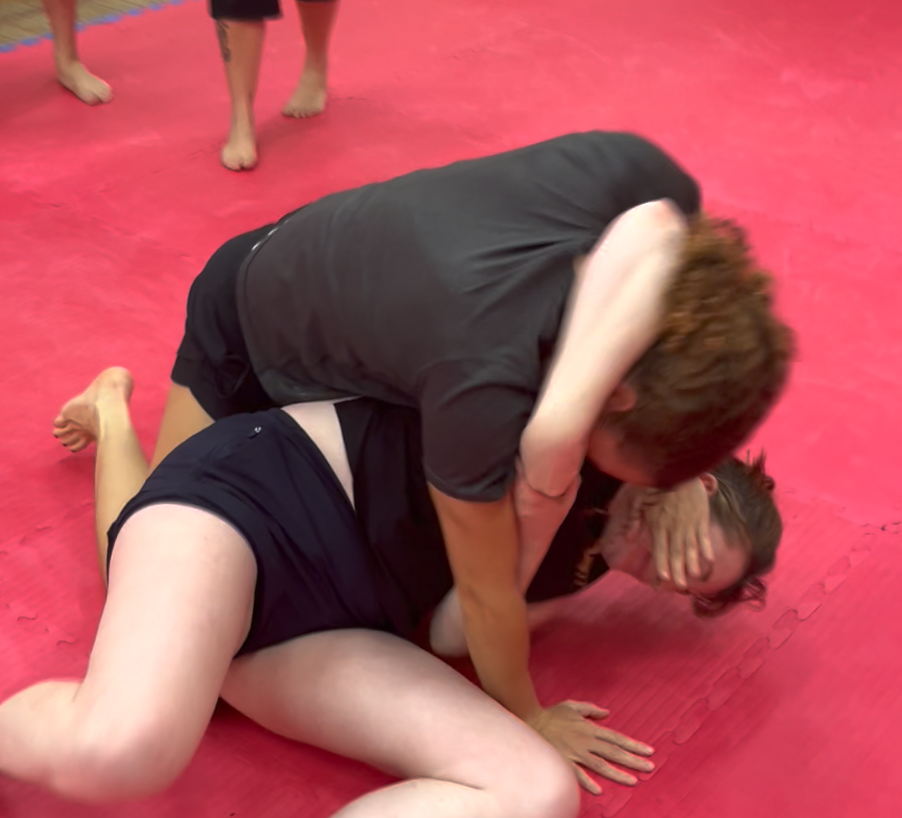
What techniques work on the floor
Why the floor is the place to avoid
In a violent confrontation the floor is a dangerous place. When you’re down you’re often dealing with reduced mobility, limited visibility, and the real possibility of multiple attackers. Escape routes are constrained, help can be harder to reach, and it’s more difficult to protect your head and vital areas. Because of that, prevention and avoidance are your best tools: situational awareness, keeping distance, and deescalation. That said, violent encounters are unpredictable. If you do find yourself on the ground, it helps to understand practical options for creating space and getting back to your feet!
Using frames and distance to create space
When you’re on the ground your priority is to create distance between you and the aggressor so you can escape. One common guiding principle taught in self defence and grappling is to use your forearms, knees and shins to create frames to keep someone from closing in, to block or limit the power of incoming strikes, and to create time and space to move. In practice this looks like maintaining a barrier between yourself and the attacker and using body positioning to avoid being pinned. If you are unable to keep the aggressor at a safe distance, then you need to learn to break posture and keep them close so you reduce their striking power and when you can reestablishing space so you can escape.
Upkicks, disruptions and sweeps
There are methods taught in many martial systems that focus on using lower body movement to disrupt an opponent’s balance or create a window to escape. The broad idea is simple: use legs and hips to create momentum or distraction so the person on top can’t remain stable and then use that moment to get to a safer position or stand. In a self defence context, these are taught as ways of getting off your back so you can end up in a dominant position and escape.
Fight smart, Fight Hard, Fight Dirty
In a life threatening situation, survival and escape are the priorities. That means focusing on actions that quickly allow you to get away, summon help and put distance between you and the danger. Do what you need to get away and reduce harm to yourself!
If you briefly gain an advantage, get away, don’t stay to fight
This isn’t a competitive fight. The goal is not to “win” the encounter, it’s to escape. If you create an opportunity to move into a more dominant or safer position, enough to break free from control or to create distance, use that moment to get up and run or call for help. Prolonged fighting from a dominant position increases legal risk (as you can be seen as the aggressor or the force may no longer be deemed reasonable) and decreases your chance of safely getting away.
Avoid the floor in the first place: prevention and anti-wrestling principles
The best defence is avoiding the situation entirely. Practice how to avoid being grab, breakaway techniques, how to reduce the chance of a takedown, and how to break common holds, such as a bear hug. Building awareness, using your voice, traveling with a companion when possible and avoiding confrontation is always the first port of call. However, if you end up being in a situation where violence does occur, ensure you have the skills to manage it.
Next steps
Come to one of our self defence classes to learn how to get off the floor safely and all of the physical skills involved in self defence. Come and try a class! All levels are welcome.