
Why We Freeze - And How to Train Your Body to React in a Real Self-Defence Situation
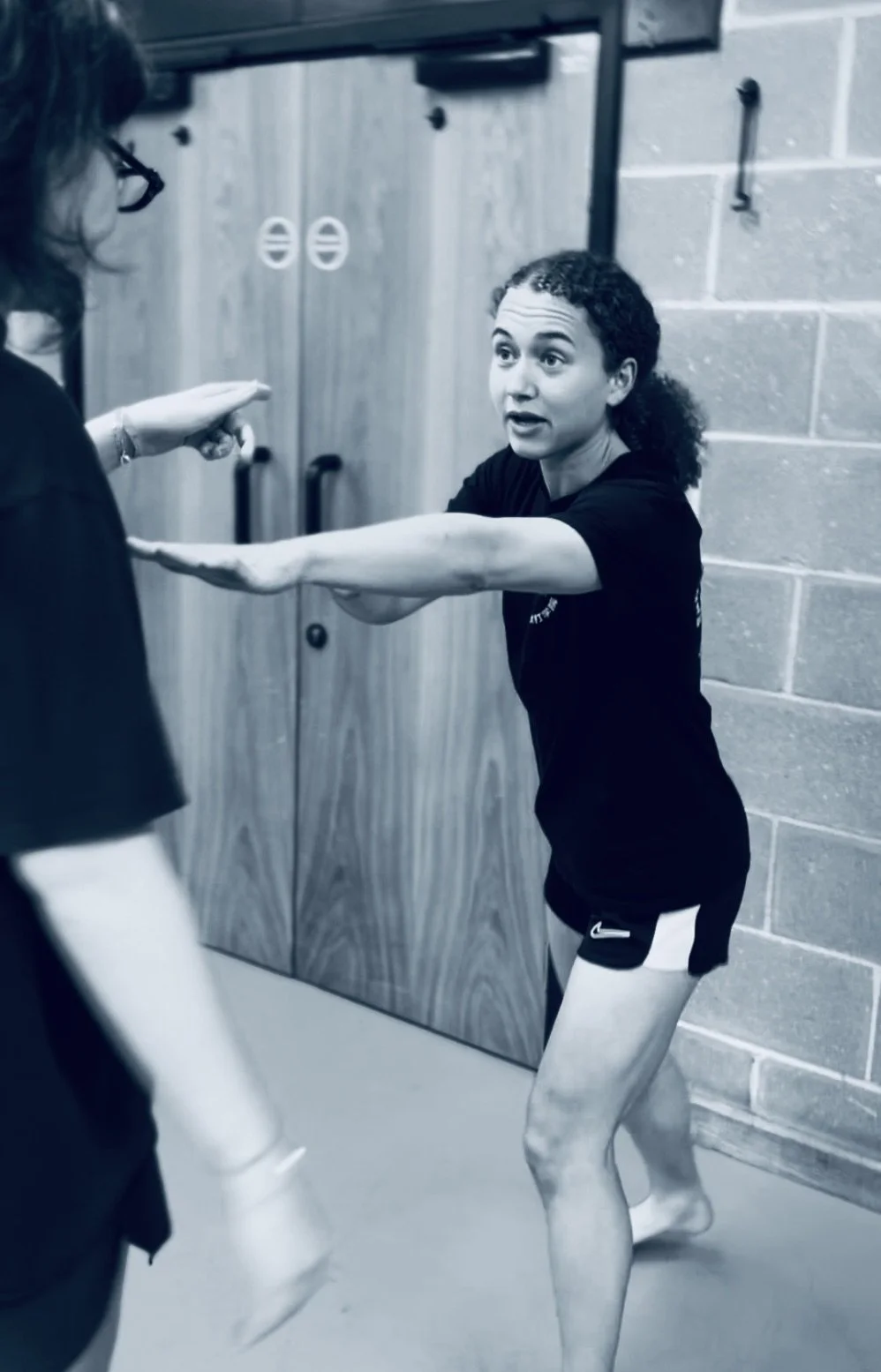
Why We Freeze And How to Train Your Body to React in a Real Self Defence Situation
When people think about self-defence, they imagine striking, blocking, escaping…
But the truth is, most of us do none of those things when a real threat suddenly appears.
Freezing is one of the most common human responses in threatening situations, and it happens to absolutely everyone, even experienced martial artists. You will never stop feeling fear (and you shouldn’t; fear is designed to keep you safe). But you can retrain what your body does after that initial shock.
In our Brixton Self Defence classes in London, we spend a lot of time helping students “reset their default button.” You learn how to manage the freeze response, react faster, and build instinctive behaviours you can rely on in real-life situations.
Here’s how it works.
Understanding the Fight, Flight, Freeze Response
When you face a real or perceived threat, your body instantly triggers a stress response.
Physiological changes
Adrenaline and cortisol flood the body
Heart rate and blood pressure spike
Breathing becomes shallow and fast
Pupils dilate
Blood shifts to major muscle groups
You may shake, tremble, sweat or feel sick
Your body is gearing up for survival.
Psychological changes
Heightened senses
Fear, anxiety or anger
Feeling jumpy, overwhelmed or tense
Thinking becomes foggy or distorted
Together, these create fight, flight or freeze.
Freezing is not weakness — it’s biology. It’s the same mechanism that helps animals stay still when threatened. Humans do it too.
Fear Isn’t the Enemy
Fear isn’t just physical - it’s psychological.
The goal isn’t to remove fear.
The goal is to stop fear from shutting you down.
A little fear can:
Sharpen your awareness
Increase readiness
Motivate preparation
Help you avoid danger
Too much fear can:
Impair clear thinking
Delay your reactions
Cause you to freeze at the wrong moment
Self-defence training isn’t about becoming fearless.
It’s about becoming functional while afraid.
What Happens in a Surprise Attack
Real-world violence is rarely a premeditated, square-off fight.
It’s sudden. It’s close. It’s fast.
You rarely have time to think.
If you’re attacked by surprise:
You may only have a split second to react
You might get hit before you even see the person
Your brain will be behind your body
Your reactions must already be pre-programmed
This is why physical skill alone isn’t enough. You need scenario training, live drills and stress inoculation, exactly the kind of training used in professional settings.
As the Navy SEALs say:
“We don’t rise to the level of our expectations; we fall to the level of our training.”
The Anti-Freeze Drill: Resetting Your Default Reaction
Our Anti-Freeze Drill (a name we coined at Brixton Self Defence) is designed to help you:
Manage the moment of shock
Override the freeze
Build automatic reactions
Bring your hands up protectively
Move, create space, and respond under pressure
Strike or escape without overthinking
Think of it as desensitising the fear response.
Just as your hands fly up automatically when you hear a loud bang, we teach your body to react instantly when something fast and unexpected happens close to you.
You can’t learn this from theory. It must be practised with:
Appropriate pressure
Realistic, varied scenarios
Unpredictable triggers
A partner or coach
Repetition
This is what rewires your reactions.
Scenario Training: Real Reactions, Not Just Techniques
We layer drills such as:
Attack With Surprise — sudden close-range attacks
Cover & Wedge — protecting your head at the moment of impact
Turn & Move — escaping tight or enclosed spaces
Padwork Under Pressure — striking while being pushed, grabbed or startled
Boundary-Setting Under Stress — knowing when de-escalation has failed
You’re not learning to “fight.”
You’re learning to respond.
You’re training your nervous system, not just your muscles.
Can You Change Your Physiological Response?
No. Your adrenaline response is millions of years old.
Can You Change Your Psychological Response?
Yes, completely.
With the right training, you can:
Recognise fear without feeding it
Focus on the threat instead of the emotion
Move instead of freeze
Use fear as fuel
Create automatic habits that bypass panic
That’s what Anti-Freeze and Attack-With-Surprise drills are built for.
A Final Word on Freezing
Everyone freezes.
Everyone feels fear.
This is not a flaw — it’s your built-in survival mechanism.
But with the right training, you can learn to:
Reset your default
Overcome the freeze faster
Move when it matters
Explode into action when attacked
Trust your reactions
Protect yourself and others
Scenario-based self-defence training is different from traditional martial arts - and that’s exactly why it works.
If you want to react faster under pressure, build confidence, and learn practical, realistic skills, join us at Brixton Self Defence for a free trial session.
Your fear won’t disappear - but your freeze will.